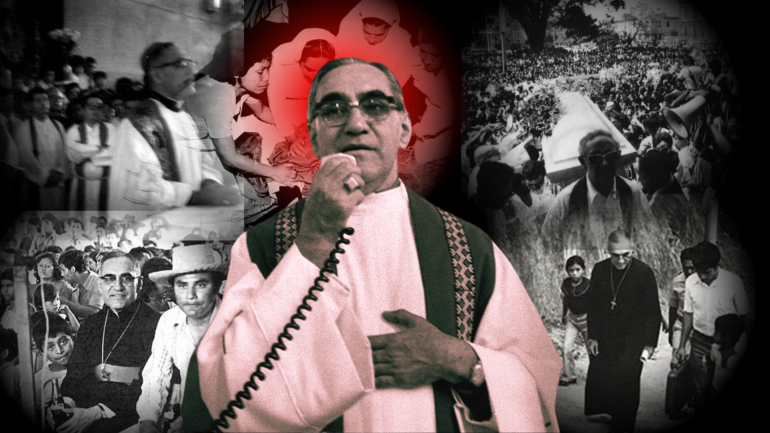
On March 24, the Church honors Óscar Romero, a pastor who became a voice for the persecuted and a martyr whose witness continues to challenge believers.
In the turbulent 1970s, El Salvador was a nation gripped by fear. Military repression, death squads, and a widening chasm between rich and poor left ordinary citizens trapped in a climate of terror. For the campesinos - small farmers eking out a living on land they barely owned - every day was a gamble for survival. And yet, amid the darkness, one voice rose above the din, unwavering in its insistence on truth: Archbishop Óscar Romero.
Romero was a man of humble beginnings. Born in 1917 in Ciudad Barrios, he entered the seminary as a young man and rose through the ranks of the Salvadoran Church with a reputation for piety and devotion. Initially seen as conservative, a safe choice for the episcopacy, Romero’s transformation into a vocal advocate for the oppressed was neither sudden nor accidental. It was forged in grief - the assassination of close friends and priests who ministered to the poor - and sharpened by conscience.
Preaching Justice, Not Politics
Sunday Mass at Romero’s cathedral was no ordinary liturgy. His sermons, broadcast on the radio, became a lifeline for those living in fear. Each week, Romero read the names of the dead, the disappeared, the victims of military and paramilitary violence. He refused to cloak injustice in euphemism; he did not speak in political slogans, but in moral clarity.
“Somebody has to speak for the voiceless,” Romero said in one homily. “Somebody has to defend the poor.”
This moral clarity was revolutionary in a nation where silence was survival. Many bishops turned a blind eye to abuses, fearful for their safety or hesitant to anger the state. Romero stood alone, insisting that the Gospel demanded advocacy, that faith divorced from justice was empty.
The Price of Conscience
Courage has a cost, and Romero paid it in full. Threats shadowed him, letters warned him, and tension seeped into every corner of his life. The night before his assassination, he presided over a prayer vigil for the victims of state violence, his voice calm but resolute. The next morning, on March 24, 1980, a sniper’s bullet pierced the sanctuary while Romero elevated the host at Mass. The shepherd had fallen, killed at the very altar where he had preached truth and defended the powerless.
His death sent shockwaves through El Salvador and the world. Yet even in martyrdom, Romero’s life offered a moral compass. His sacrifice reminded the faithful that holiness is not measured by personal comfort but by fidelity to God’s call, even in the face of mortal danger.
Lessons Beyond Borders
Romero’s story resonates far beyond the borders of Central America. In Malaysia and across Southeast Asia, where social injustice, political oppression, and human rights violations are often met with silence, his life speaks to the conscience. It challenges believers to ask: when does faith demand action? When does prayer alone become insufficient to the suffering around us?
His life and death offer a particularly pointed lesson for priests who risk being trapped in clericalism - comforted by hierarchy, routine, or ritual while ignoring the struggles of the people they serve. Romero reminds clergy that true ministry is lived among the suffering, in solidarity with the oppressed, and never as a shield behind office walls or privilege.
For lay Catholics and communities quietly witnessing discrimination, forced disappearances, or custodial deaths, Romero’s example is both an inspiration and a challenge. The pulpit is not merely for comfort, but for conscience; silence in the face of injustice is complicity; courage can transform fear into moral witness.
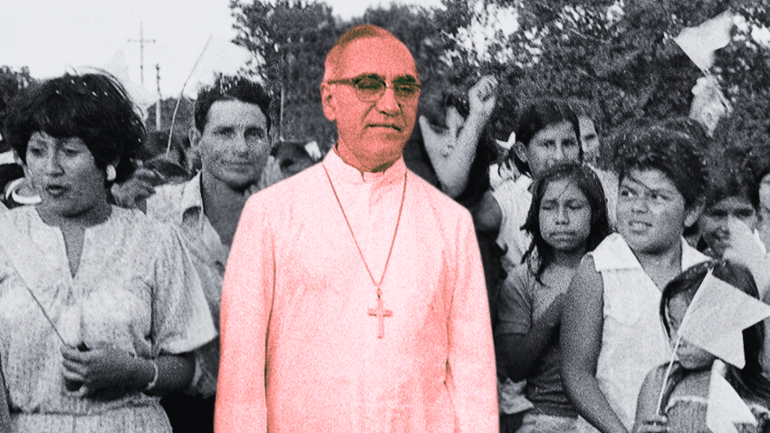
The Global Witness
When Pope Francis canonised Romero in 2018, decades after his assassination, the world was reminded that martyrdom is not confined to the past. In contemporary contexts - where journalists are threatened, activists silenced, and minorities targeted - Romero’s legacy endures. The Church celebrates him not merely as a historical figure, but as a living standard for justice-infused discipleship.
“The blood of martyrs is seed for the Church,” Romero once said. Today, his blood still waters the soil for those daring to speak truth to power.
A Challenge for Today
Romero’s life is a mirror. In Malaysia, the Philippines, Indonesia, and beyond, governments and institutions wield power with varying degrees of accountability. Citizens face choices: to speak, to act, to pray silently, or to remain mute. Romero’s canonisation challenges us all to choose courage, to let conscience guide action, and to recognize that faith without justice is hollow.
His story is also a challenge to those within the Church hierarchy, to priests, bishops, and religious leaders: to resist clericalism and ritualism when they distance the clergy from the suffering of their people. Romero’s example shows that holiness demands engagement with the world’s pain, and moral authority is earned through solidarity, not office.
Óscar Romero’s life was brief, his ministry fraught with danger, his death violent. Yet in that brevity, in that danger, in that martyrdom, he accomplished what many cannot: he became a voice for the voiceless, a shepherd for the oppressed, and a saint whose witness continues to illuminate the path of justice for the faithful worldwide.
Radio Veritas Asia (RVA), a media platform of the Catholic Church, aims to share Christ. RVA started in 1969 as a continental Catholic radio station to serve Asian countries in their respective local language, thus earning the tag “the Voice of Asian Christianity.” Responding to the emerging context, RVA embraced media platforms to connect with the global Asian audience via its 21 language websites and various social media platforms.
Latest News