




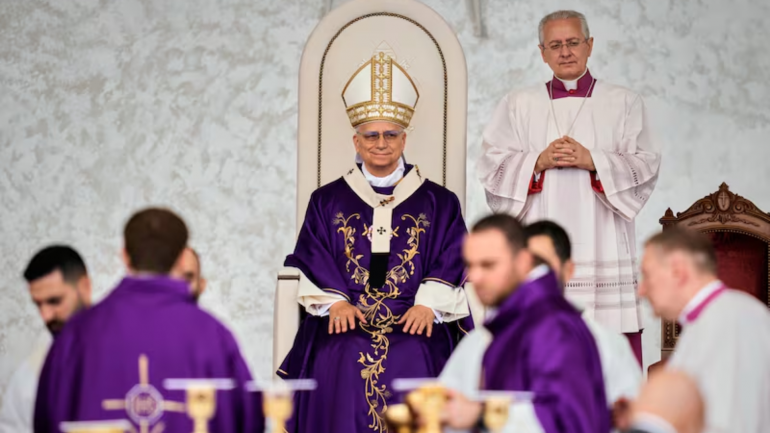
In his Message for Lent 2026, Pope Leo XIV has called on Catholics worldwide to embrace “listening and fasting” as paths of authentic conversion, urging the faithful in particular to abstain from harsh words and rash judgment.
Released on February 5 at the Vatican ahead of Ash Wednesday on February 18, the Pope’s Lenten message is titled “Listening and Fasting: Lent as a Time of Conversion.” He invites Christians to place the mystery of God back at the center of their lives and to rediscover renewal through openness to God’s word.
Listening as the beginning of conversion
The Holy Father emphasized that every journey of conversion begins with listening — allowing the Word of God to touch and transform the heart.
“In the midst of the many voices present in our personal lives and in society,” he said, Sacred Scripture helps believers recognize and respond to the cry of those who suffer.
Drawing on the biblical account of Moses and the burning bush, the Pope recalled how God hears the cry of His people. Listening, he explained, is not passive but relational — it opens the path to liberation and salvation.
The Pope’s reflection on listening echoes a theme he has repeatedly highlighted in his addresses on the Church’s synodal journey. On several occasions, he has reminded Catholics that the Church must become a community that listens — to God, to one another, and especially to those on the margins. True ecclesial renewal, he has said, begins not with strategies, but with attentive hearts.
In continuity with those teachings, the Pope stressed in his Lenten message that listening must include attentiveness to the poor and the oppressed.
The “cry of the poor,” he noted, continues to challenge not only political and economic systems but also the Church herself.
Fasting that purifies desire
Turning to fasting, Pope Leo XIV described it as an ancient and essential practice on the path of conversion. Because it involves the body, fasting reveals what we truly hunger for and helps believers reorder their desires.
“Fasting makes it easier to recognize what we ‘hunger’ for,” he wrote, adding that it keeps alive the thirst for justice and frees Christians from complacency.
However, he cautioned that fasting must be practiced in faith and humility, rooted in communion with the Lord. Without nourishment from the Word of God, he warned, fasting risks becoming empty or prideful.
The Pope also encouraged a sober lifestyle through various forms of self-denial, reminding the faithful that Christian austerity strengthens authentic discipleship.
Fasting from words that wound
At the heart of his message, Pope Leo XIV proposed what he described as a “very practical and frequently unappreciated form of abstinence” — refraining from words that offend and hurt others.
“Let us begin by disarming our language,” he said, urging Christians to avoid harsh words, rash judgment, slander, and speaking ill of those who are absent and unable to defend themselves.
He specifically mentioned families, workplaces, social media, political debates, the media, and Christian communities as spaces where believers are called to cultivate kindness and respect.
This appeal also reflects his broader insistence that communication within the Church and society must be rooted in charity and truth. Listening, he implies, is not possible where language is weaponized. Only when words are purified can genuine dialogue take place.
In doing so, he said, words of hatred can give way to words of hope and peace.
A communal journey of conversion
The Pope concluded by highlighting the communal dimension of Lent. Parishes, families, ecclesial groups, and religious communities are invited to walk together in listening and fasting.
Conversion, he explained, concerns not only individual conscience but also the quality of relationships and dialogue. It requires allowing ourselves to be challenged by reality and by humanity’s thirst for justice and reconciliation.
In line with his repeated calls for a more listening Church, Pope Leo XIV urged Christian communities to become places where the cry of the suffering is heard and where listening opens paths toward liberation.
“I impart my heartfelt blessing upon all of you and your Lenten journey,” he wrote.
Let us know how you feel!
Comments





is enlighting.
- Reply
Permalink