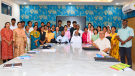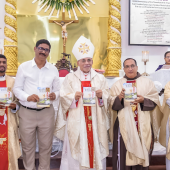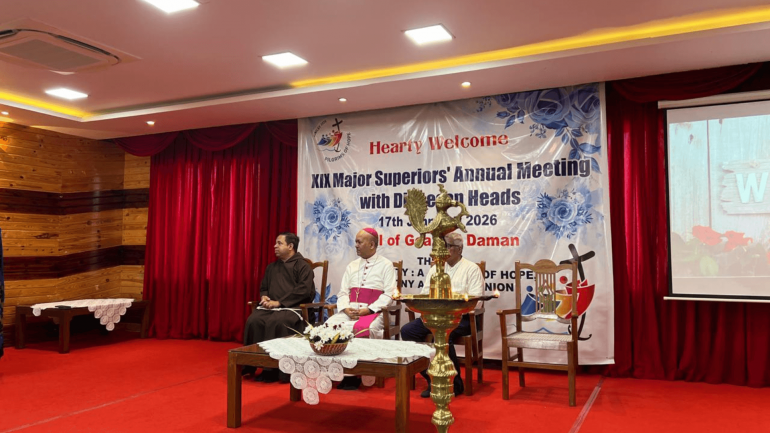
The Conference of Religious of India (CRI), Goa Unit, organised the XIX Major Superiors’ Annual Meeting with Diocesan Heads on January 17, 2026, at the Pilar Pilgrim Centre, Pilar. The gathering brought together Major Superiors of religious congregations serving in the Archdiocese of Goa and Daman, southwest India.
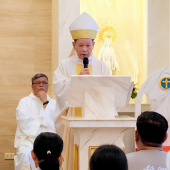
The meeting was inaugurated with the lighting of the traditional lamp by Bishop Simião Fernandes, Auxiliary Bishop of Goa and Daman, in the presence of Fr Joaquim Fernandes, SVD, Episcopal Vicar for the Religious; Fr Gabriel Fernandes, OFM Cap., President of CRI (Goa Unit); and Sr Daisy, JMJ, Vice President of CRI (Goa Unit), Sr Fatima Rodrigues, FMCK, Superior General of the FMCK; Sr Faria Barretto, HC and Superior General of the Congregation of the Handmaids of Christ.
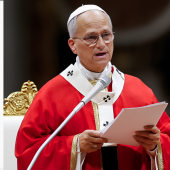
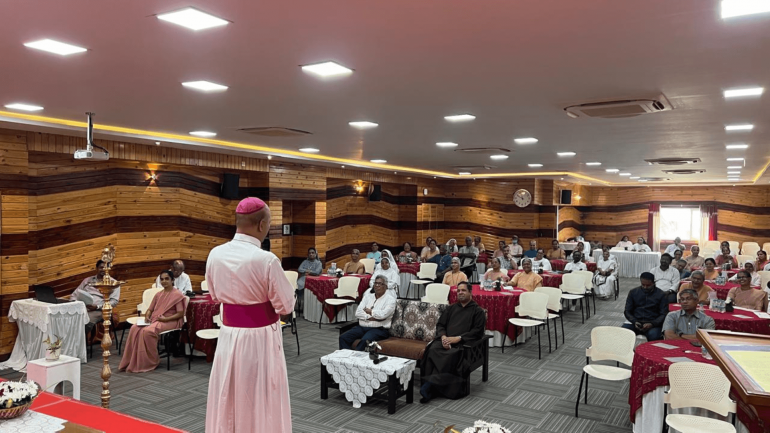
Addressing the gathering on the theme “Synodality: A Journey of Hope, Harmony, and Communion,” Bishop Simião Fernandes invited religious congregations to strengthen collaboration in responding to the pastoral challenges of the Church. He emphasised the need to safeguard and sustain Catholic educational institutions, deepen involvement in parish life and catechetical formation, and work together in addressing ecological concerns.
Speaking on behalf of the Archbishop, Bishop Fernandes structured his address around five key dimensions, each ending with “–ation”: Appreciation, Information, Collaboration, Clarification, and Contemplation.
Bishop Fernandes acknowledged the invaluable contribution of religious congregations to the life and mission of the Archdiocese, particularly in the fields of education, healthcare, pastoral and social ministry, parish animation, prison ministry, ministry to women in distress, and migrant pastoral care. He affirmed that the selfless service of religious communities continues to shape faith, values, and social consciousness across the Archdiocese.
Sharing key ecclesial updates, Bishop Fernandes highlighted major priorities of the Church. Referring to the Final Document of the Second Session of the Synod (October 2024) and the booklet Pathways for the Implementation Phase of the Synod, he outlined the synodal timeline: diocesan-level implementation during 2025–2026; diocesan evaluation in the first half of 2027; national and international episcopal evaluations in the second half of 2027; continental evaluation in early 2028; and the General Assembly in 2028.
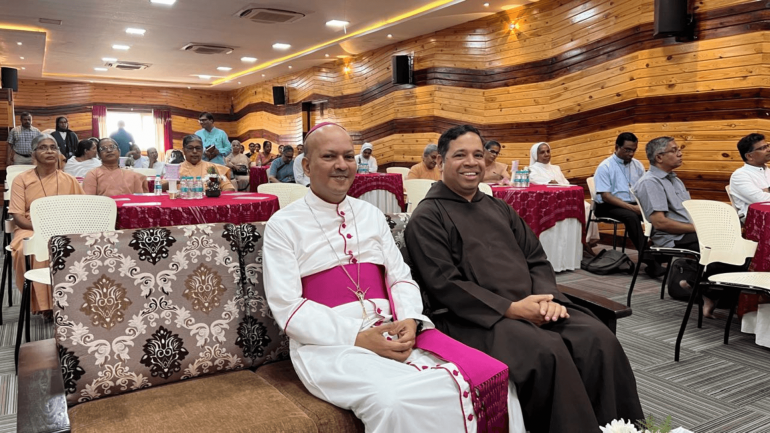
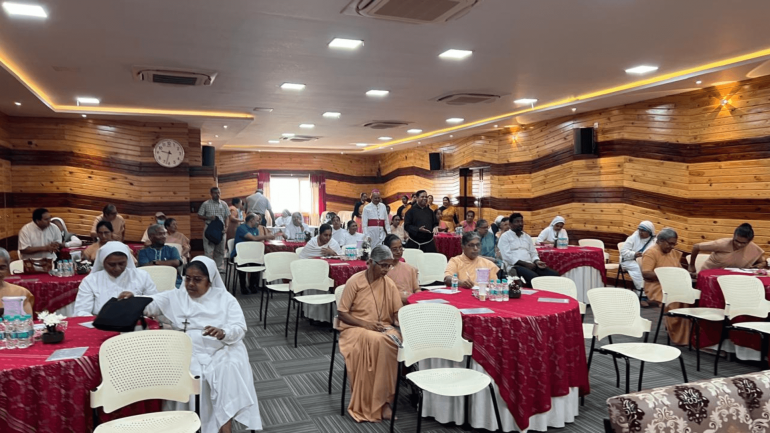
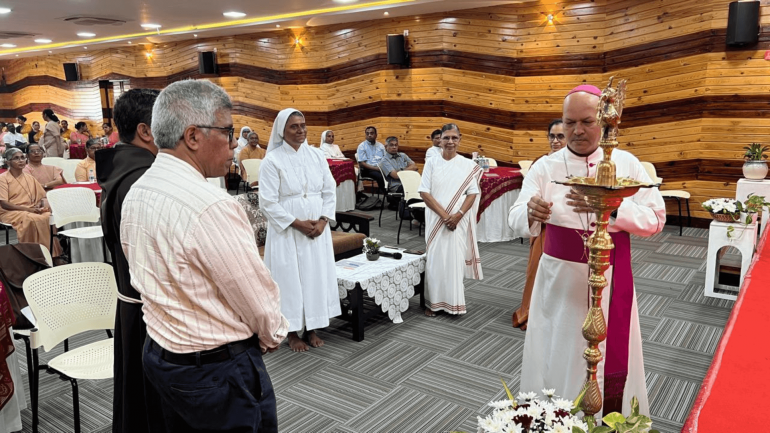
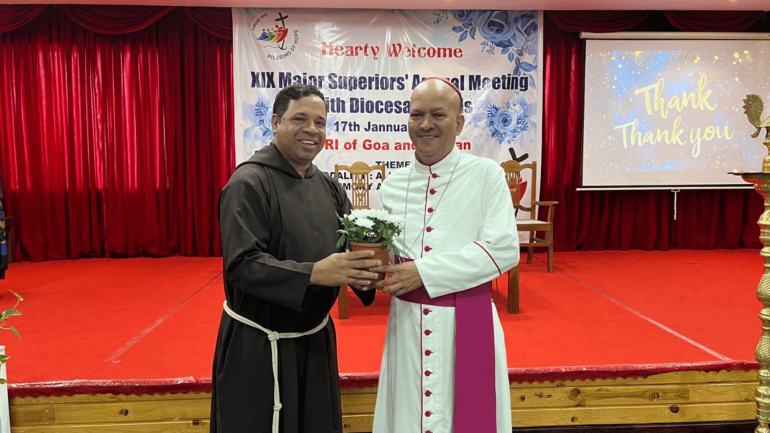
He also presented the eight facets identified by the Archdiocesan Synodal Team—a synodal, listening, co-responsible, participatory, inclusive, accountable, compassionate, and visionary Church—stressing that the implementation phase calls for concrete action.
On interreligious dialogue, while affirming its importance in a pluralistic society, Bishop Fernandes urged pastoral prudence and discernment to avoid misunderstanding or confusion among the faithful.
Referring to the Diocesan Pastoral Plan aligned with the CCBI’s Mission 2033, coinciding with the 500th anniversary of the Archdiocese, he highlighted its participatory and grassroots nature, involving clergy, religious, laity, migrants, persons with disabilities, and various apostolates.
He also raised pastoral concerns regarding Sunday Masses in religious houses and institutions, the need for greater integration with parish life, and fidelity to liturgical norms, calling for shared reflection and dialogue. Concluding, he invited religious communities to prayerful contemplation and discernment, encouraging deeper collaboration and participation in diocesan pastoral life, noting that synodality calls the Church to walk together in listening and discernment.
This was followed by group discussions inviting participants to reflect on pathways that religious congregations can adopt as they journey in synodality. The discussions explored ways to enhance collaboration, particularly in formation programmes, education, and social apostolates. Participants also reflected on how religious can actively participate in diocesan initiatives such as monthly meetings, retreats, live-in programmes, and pastoral enrichment programmes. The groups further considered how religious can continue to be Apostles of Hope as they move forward beyond the Jubilee Year.
The group discussions were moderated by Fr Joaquim Rebelo, SFX, Provincial Superior of the Goa Province of the Society of Pilar. As a fruit of these deliberations, participants offered several valuable suggestions for strengthening synodal collaboration and mission.
Fr Henry Falcão, Episcopal Vicar for the Central Zone, reaffirmed the Church’s commitment to the poor while reflecting on Dilexi Te, the Apostolic Exhortation of Pope Leo XIV. He reminded the gathering that the Church’s mission cannot be fulfilled if the poor are sidelined. He urged participants to evaluate their programmes and pastoral initiatives in terms of their impact on the poor.
Referring to the Archbishop’s pastoral letter and the emerging diocesan pastoral plan, Fr Falcão noted that certain Church structures, though once necessary, may need to be remodelled, replaced, or reimagined to respond effectively to present pastoral realities. Emphasising institutional discernment, he called upon religious congregations and Church bodies to ensure that their structures genuinely serve the poor. He concluded by appreciating the ongoing efforts of religious communities and encouraged continued collaboration through the CRI Goa Unit.
Fr Clive Telles, Provincial Superior of the Salesian Konkan Province, presented a session on “Ways Forward in Collaboration with the Diocese.”
Sr Justina Vaz, HC, Joint Treasurer of CRI (Goa Unit), presented a report on the Jubilee celebrations organised by the CRI Goa Unit.
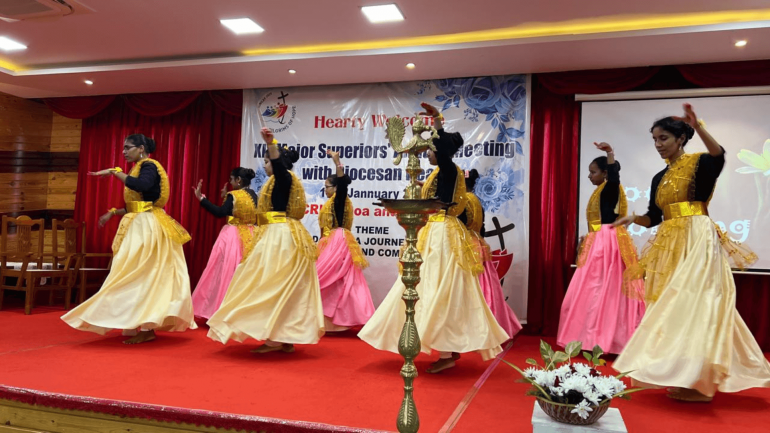
The programme began with a welcome address by Fr Gabriel Fernandes, OFM Cap., President of CRI (Goa Unit), followed by a prayer dance presented by the Sisters of Mater Dei. The Executive Committee of CRI (Goa Unit) was felicitated at the hands of Bishop Simião Fernandes.
The programme was anchored by Br Vinod Reddy, SG, and Sr Ayres Raimundo, while the vote of thanks was proposed by Br Charles D’Souza, CFC.
Radio Veritas Asia (RVA), a media platform of the Catholic Church, aims to share Christ. RVA started in 1969 as a continental Catholic radio station to serve Asian countries in their respective local language, thus earning the tag “the Voice of Asian Christianity.” Responding to the emerging context, RVA embraced media platforms to connect with the global Asian audience via its 21 language websites and various social media platforms.
Latest News