More Catholic faith leaders and religious communities in the Philippines have expressed support for a just transition away from fossil fuels in 2025, according to a December press release from the Laudato Si’ Movement – Asia Pacific.
Their support extends to the proposed Fossil Fuel Non-Proliferation Treaty (FFNPT), affirming the Church’s pastoral responsibility to care for creation and to stand in solidarity with communities most affected by the climate emergency.
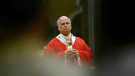
Bishop Mylo Hubert Vergara of the Diocese of Pasig, in his Season of Creation message this year, emphasized that the ecological crisis is deeply interconnected with the suffering of both the poor and the Earth. As a shepherd of the Church, he said he “joins the global call for decisive and prophetic action” in response to the climate emergency, including support for the FFNPT.
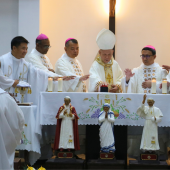
From the island province of Palawan, Bishop Broderick Pabillo of the Apostolic Vicariate of Taytay likewise expressed his support for the treaty in a message sent to the Laudato Si’ Movement. Acknowledging the urgent need to protect people and ecosystems, he stated, “I support the FFNPT. We all should do our best to protect our common home, and fossil fuels are a big threat to us all.”
Religious congregations have also added their voices to this growing moral appeal. The Adrian Dominican Sisters, Our Lady of Remedies Mission Chapter, through their Justice and Peace Ministry, expressed concern over the continued dependence on fossil fuels and its harmful impact on communities and the environment.
Represented by Sr. May Cano, OP, the congregation, currently serving in the province of Pampanga and the cities of Malabon, Caloocan, and Navotas in Metro Manila, affirmed its commitment to ecological care as an expression of faith.
“We support initiatives like the FFNPT, which seeks an equitable pathway to a fossil fuel-free world,” Sr. Cano said. “We commit ourselves to advocating renewable energy, responsible stewardship of the Earth, and policies that reflect our love for God’s creation.”
Advocates of the Fossil Fuel Non-Proliferation Treaty emphasize that faith-based voices play a vital role in shaping public conscience and calling for policies that safeguard both the planet and human dignity.
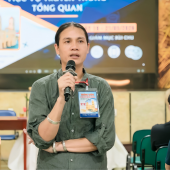
According to Adrian B. Tambuyat, Asia Pacific Programs Coordinator of the Laudato Si’ Movement, the growing support from Church leaders and religious communities reflects a shared conviction that care for creation is inseparable from the mission of caring for people.
Radio Veritas Asia (RVA), a media platform of the Catholic Church, aims to share Christ. RVA started in 1969 as a continental Catholic radio station to serve Asian countries in their respective local language, thus earning the tag “the Voice of Asian Christianity.” Responding to the emerging context, RVA embraced media platforms to connect with the global Asian audience via its 21 language websites and various social media platforms.
Latest News