January 15, 2026 Thursday of the First Week in Ordinary Time
Daily Readings: 1 Samuel 4:1-11; Mark 1:40–45
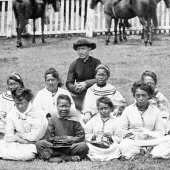
Children of God: There is a striking story from Asian Christian history that helps us hear more deeply the gospel story of Jesus' encounter with a leper. In the early 17th century, during the persecution of Christians in Japan, historical accounts tell us that the Tokugawa regime, sometimes popularly remembered as the “emperor” in local retellings, sent a group of people considered unwanted by society to Manila around 1632. Among them were lepers and exiled Christians. This was their way of discarding those seen as impure and problematic. Yet what was intended as rejection became, in God’s providence, a blessing. The Church in the Philippines, the missionaries received them with compassion, and some traditions even describe them as a “gift,” not because of their illness, but because of the mercy they awakened.
In the gospel story of Mark, Jesus encounters a leper, someone excluded, feared, and avoided—and responds with touch and mercy (Mark 1:40–45). What are our inspirations for today? What do these stories teach us about how God sees those whom society pushes aside?
First, God’s mercy transforms those the world rejects into signs of grace. In the gospel of Mark, the leper kneels before Jesus and says, “If you wish, you can make me clean” (Mark 1:40). The leper does not demand healing; he entrusts himself to the mercy of Jesus. Jesus responds in a shocking way. He stretches out his hand and touches the leper, saying, “I will do it. Be made clean” (Mark 1:41). It was something nobody expected! God often turns society’s discarded into teachers of compassion.
Second, healing in God’s kingdom restores dignity more than it removes suffering. Jesus does more than heal the leper’s skin; he restores the man’s place in the community (Mark 1:41–42). By touching him, Jesus gives back what disease and fear had taken away: human dignity. This reminds us that Christian holiness is not measured by distance from pain, but by closeness to those who suffer. The Church becomes most faithful when it chooses presence over comfort.
Children of God: The leper healed by Jesus and the lepers once sent to the Philippines remind us that God’s grace often arrives disguised as human weakness. When we receive the rejected, we encounter Christ himself.
Radio Veritas Asia (RVA), a media platform of the Catholic Church, aims to share Christ. RVA started in 1969 as a continental Catholic radio station to serve Asian countries in their respective local language, thus earning the tag “the Voice of Asian Christianity.” Responding to the emerging context, RVA embraced media platforms to connect with the global Asian audience via its 21 language websites and various social media platforms.
Latest News