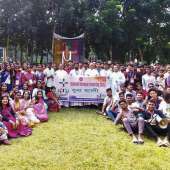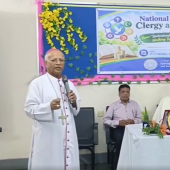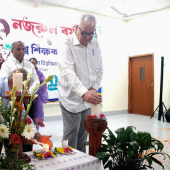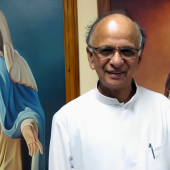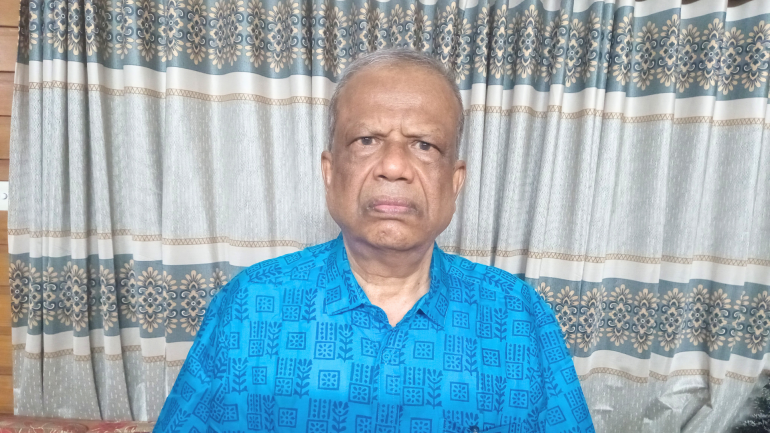
William Atul Kuluntunu, 70, is a renowned Christian hymn writer and former Additional Secretary in Bangladesh’s Ministry of Public Administration. Over a prolific career spanning four decades, he has written lyrics for more than 2,400 songs, including 407 Christian hymns. More than 20 of his hymns are included in Geetaboli, the official hymnbook used for Holy Mass and other liturgical celebrations across Bangladesh.
Published by the Christian Communication Center under the Episcopal Commission for Social Communications, Geetaboli contains over 1,000 hymns. Kuluntunu’s songs are among the most frequently sung by Bangladeshi Catholics.
One of his most beloved compositions, “Shito Majhe Elo Borodin Elo Bujhe Oi Phere” (“In the midst of winter, Christmas feels like it has come back”), is widely sung across the country on Christmas Day and has become a signature Christmas hymn in Bangladesh.
Kuluntunu, a former officer of the Bangladesh Civil Service (Information Cadre), was born on February 20, 1955, in Kalikapur village of Banpara in Natore district. A freedom fighter, writer, journalist, and poet, he is also an enlisted lyricist with Bangladesh Betar (Radio) and Bangladesh Television (BTV). For more than 40 years, his hymns have been sung in churches throughout the country, especially during Christmas and Easter. His music is also popular abroad through audio CDs and online platforms such as YouTube.
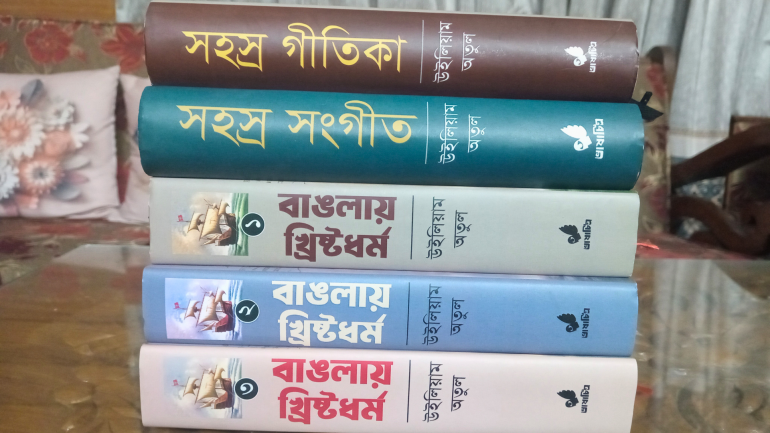
“Since I was born into a Christian family, I write songs on Christian themes. I consider it my moral responsibility to praise and worship God through my songs,” he told RVA. He has published two songbooks, each containing 1,000 songs, and another book of Christian hymns is expected to be released soon.
Recalling the origin of his famous Christmas hymn, Kuluntunu said, “At that time, I was working as a journalist with the weekly Pratibeshi, published by the Christian Communication Center. The director, Father Jyoti Gomes, asked me to write a Christmas song. I was inspired by Nidhan D’Rozario, a prominent Christian writer, who guided me in songwriting. On November 9, 1977, I wrote five Christian hymns, two of which became very popular.”
Another of his well-known hymns, “Pothohara Pothikera Aie Sute Aie” (“Lost travelers, come quickly”), continues to be widely sung. Kuluntunu believes the enduring appeal of his Christmas hymn lies in its strong sense of Bengali cultural identity. “As long as there is rice in the fields and winter comes in December, people will remember and sing this song,” he said.

His hymns are sung by both Catholics and Protestants in churches across Bangladesh and by Bengali Christian communities in India, the United States, Canada, and Europe. “During Christmas, my well-wishers send me videos saying, ‘Look, the song you wrote is being sung,’” he said with joy.
The themes of his songs include the birth of Jesus, pastoral life, death, Christian values, and contemporary events such as the COVID-19 pandemic and tragic incidents like the Nimtali fire in Dhaka. Offering advice to young writers, he said, “Rabindranath Tagore or Kazi Nazrul Islam did not write on every subject. There are many themes to explore. If you write aptly, readers and listeners will accept your work.”
Kuluntunu also expressed a desire to collaborate with more composers. “I have written over 2,500 songs, but there are not enough composers. If there were more, people would have received many more good songs,” he noted.
In addition to songwriting, he writes essays and poetry. He has published six poetry collections, with 15 more books awaiting publication.
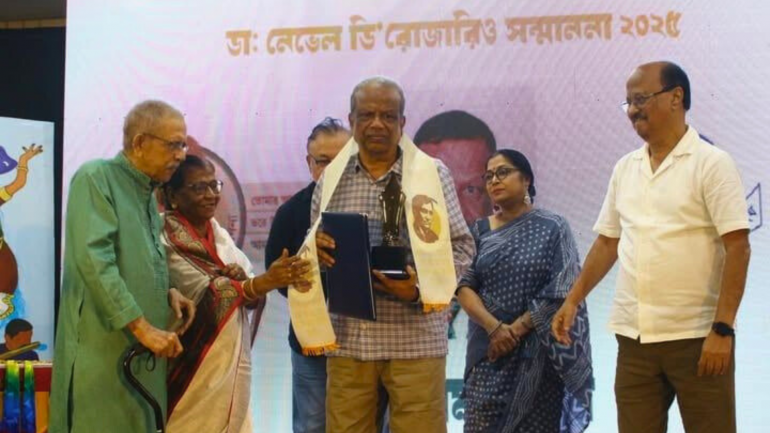
In recognition of his contributions, Kuluntunu has received numerous awards, including the Dr. Neville D. Rozario Memorial Award 2025 from the Dhaka Christian Chattra Kallyan Sangha and the William Carey Award, instituted by the Bangladesh Christian Lekhok Forum in 2011.
Radio Veritas Asia (RVA), a media platform of the Catholic Church, aims to share Christ. RVA started in 1969 as a continental Catholic radio station to serve Asian countries in their respective local language, thus earning the tag “the Voice of Asian Christianity.” Responding to the emerging context, RVA embraced media platforms to connect with the global Asian audience via its 21 language websites and various social media platforms.
Latest News