Bangladeshi Catholic Nurse Reflects Dedication and Resolve on International Nurses Day

As the world marks International Nurses Day on May 12, this year’s theme, “Our Nurses. Our Future. Empowered Nurses Save Lives,” draws attention to the people who stand at the center of healthcare systems, often under pressure and with limited resources. In Bangladesh, where the shortage of nurses remains severe, their experiences reveal the demands and risks carried by frontline caregivers every day.
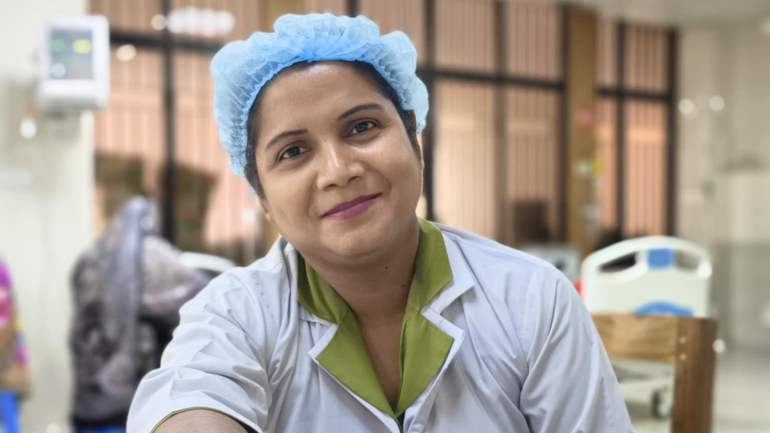
Among them is Elizabeth Corraya, a 40-year-old Catholic nurse serving at the National Institute of Kidney Diseases and Urology in Dhaka. A senior staff nurse in the post-operative ward, she spends long shifts caring for patients recovering from surgery, balancing medical responsibilities with emotional support for families navigating uncertainty.
Her interest in nursing began early in life, inspired by the portrayal of compassionate caregivers in Bengali cinema.
“As a child, I used to watch Bengali movies every Friday during the weekend. I often saw actress Shabana playing the role of a nurse. Watching those films, I also wanted to become a nurse and serve people,” she said.
Her ambition later found encouragement from her aunt, Sr. Gaetanina Corraya of the Catechist Sisters of the Immaculate Heart of Mary, Queen of Angels, who supported her decision to pursue nursing studies.
Today, Elizabeth works in one of the country’s busiest medical institutions. Patients who undergo surgery are kept in the post-operative ward for observation during the first 24 hours after their procedures.
“Our hospital has surgeries every morning. After surgery, patients are brought to our ward, where we monitor them closely. I check their files, administer medicines, and care for them according to the doctors’ instructions,” she explained.
For Elizabeth, nursing is not merely employment but a form of service that crosses social and religious boundaries.
“Through this profession, one can serve people of all castes, religions and races completely. I always wanted to serve people, and now I am doing the work I hoped for,” she said.
The profession has also given her financial stability and social standing. She supports not only her own family but also relatives from both her parents’ and in-laws’ households.
“Because of this profession, my family’s situation has improved. I can also help relatives financially. At the same time, people in society respect me as a nurse,” she said.
Yet the profession carries constant pressures. Elizabeth pointed to the risks nurses face during epidemics and public health emergencies.
“When an epidemic comes, nurses and doctors are the first to respond. We always have to be prepared to serve. Our own health is also at risk, but even then, we continue working with courage,” she said.
Inside hospitals, tensions can quickly escalate when patients die or when treatment outcomes disappoint families.
“When a patient dies, relatives sometimes get violent with doctors and nurses. There have even been attacks and vandalism inside hospitals. These are realities we also face,” she said.
Despite the strain, Elizabeth says her Christian faith remains central to her work. A mother of two, she sees her conduct toward patients as a reflection of her beliefs.
“As a Christian nurse, I try to serve patients calmly and patiently. I do not preach about Jesus directly, but I try to show my faith through my behavior and conduct,” she said.
According to Elizabeth, many patients notice that approach.
“Some patients and their relatives have told me that being a Christian makes me more caring in the way I treat them,” she added.
Prayer, she says, sustains her during difficult moments in the ward.
“When I see a patient in very critical condition, I silently pray to Jesus to heal the person and reduce the suffering,” she said.
On International Nurses Day, Elizabeth also urged people to place greater confidence in government hospitals, saying they often provide experienced care at affordable costs.
“Government hospitals receive many patients every day. Because of that, doctors and nurses there gain significant experience. People can receive good treatment at lower costs,” she said.
Bangladesh has approximately 0.66 nurses for every 1,000 people, among the lowest ratios in South Asia. In many public hospitals, a single nurse may care for between 15 and 30 patients during a shift. Despite the workload and risks, nurses across the country continue to provide care in overcrowded wards and under difficult conditions.
Elizabeth’s story reflects the realities behind this year’s International Nurses Day theme: nurses do far more than assist in treatment. In overstretched healthcare systems, they often become the human connection between illness, dignity and hope.
Radio Veritas Asia (RVA), a media platform of the Catholic Church, aims to share Christ. RVA started in 1969 as a continental Catholic radio station to serve Asian countries in their respective local language, thus earning the tag “the Voice of Asian Christianity.” Responding to the emerging context, RVA embraced media platforms to connect with the global Asian audience via its 21 language websites and various social media platforms.
Latest News