FABC Office of Social Communications Organizes Bishops’ Meet in Hong Kong to Discern AI’s Pastoral Impact

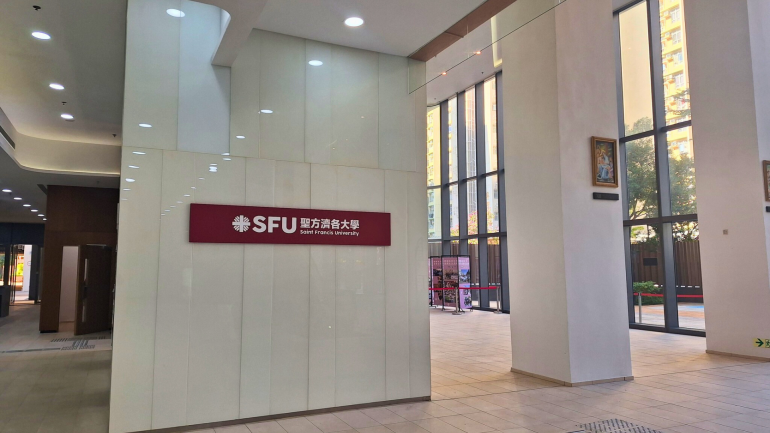
At a time when Pope Leo has repeatedly urged global leaders to ensure that artificial intelligence serves the cause of human dignity and peace, the Office of Social Communications of the Federation of Asian Bishops’ Conferences (FABC-OSC) is organizing its 2025 Bishops’ Meet in Hong Kong with a renewed call to address the pastoral, ethical, and spiritual challenges posed by AI.
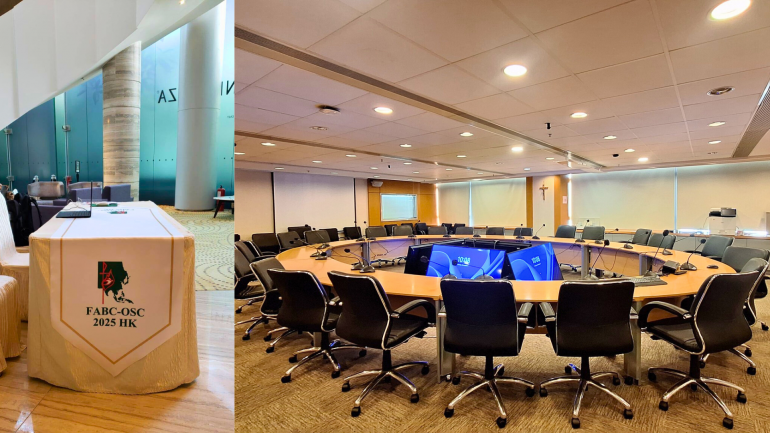
The three-day meeting, to be held from December 10–12 at St. Francis University, under the theme “Artificial Intelligence and Pastoral Challenges in Asia,” will bring together more than 30 delegates from across the continent, representing a wide range of ecclesial and communication expertise.
Delegates
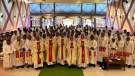
Among the participants will be seven bishops, including representatives from Vietnam, Japan, Sri Lanka, Taiwan, Thailand, and Indonesia, along with the chairman of FABC-OSC, Bishop Marcelino Antonio M. Maralit Jr. The Dicastery for Communication of the Holy See will be represented by two senior officials, underscoring the importance the Vatican places on responsible AI engagement within the Church.
The assembly will also include more than 15 priests serving in national communication offices, diocesan ministries, and Catholic media institutions. In addition, several lay professionals and media specialists will contribute their technical and pastoral insights, including experts in AI development, digital media, and fact-checking.
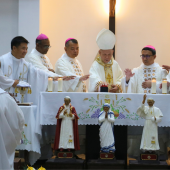
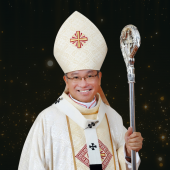
Cardinal Stephen Chow, S.J., Bishop of Hong Kong, will preside at the opening Eucharistic Celebration on December 10, inviting delegates to approach the conversations with openness, prudence, and a missionary spirit.
Sessions and Topics
During the meeting, participants will explore a range of emerging themes. Dr. Victor Lam will address “AI and Its Impact on Humanity,” offering an overview of new technological developments and their anticipated ethical and social consequences.
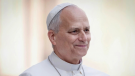
Dr. Paolo Ruffini, Prefect of the Dicastery for Communication of the Holy See, will speak on “AI and the Church,” outlining the pastoral opportunities and challenges that AI is expected to bring to evangelization, communication, and community life.
Mr. Edwin Lopez of EWTN will discuss how AI can support the mission of Catholic media. Mr. Kwok Wai Man Raymund of the Hong Kong Diocese will introduce a Scripture and Church documents semantic search application designed to assist pastoral workers and researchers. Mr. John Pan Lingtao from China will explain new methods for fact-checking and verifying online information, an increasingly urgent concern for Church communicators.
From the Vatican, Dr. Nataša Govekar, Theological-Pastoral Director of the Dicastery for Communication, will offer guidance on principles for using AI in evangelization and pastoral care, emphasizing responsible, people-centered approaches to technology.
These discussions aim to help Church leaders in Asia discern how AI can enhance pastoral mission while safeguarding human dignity, authenticity, and the relational character of Christian communication.
AI as Gift and Responsibility
In an interview with Radio Veritas Asia, Fr. John Mi Shen, Executive Secretary of FABC-OSC and Program Director of RVA, described AI as “a gift” that is already helping the Church in translation, transcription, archiving, and content creation.
“For a multilingual platform like RVA, it’s a blessing,” he said. “However, AI is only a tool. The heart of communication remains the human person. Relationships, discernment, and authenticity cannot be automated. The Church needs communicators who are both tech-savvy and spiritually grounded.”
Wider Context: AI in Asian Evangelization
The meeting’s themes echo discussions at the Great Pilgrimage of Hope in Penang last month, where Singaporean communication expert Nicholas Lim spoke on the role of digital media and AI in evangelization. Lim cautioned that AI lacks empathy and spiritual depth, warning of risks such as misleading content or secular bias. He urged Asian dioceses to build reliable Catholic knowledge bases and highlighted tools like Magisterium AI that promote doctrinal accuracy.
Looking Ahead: Toward Pastoral Guidelines for Asia
On December 12, the bishops will convene for the annual business meeting of FABC-OSC, reviewing national reports and collaborating on the draft “Pastoral Guidelines for AI in Asia.”
Bishop Marcelino Antonio M. Maralit Jr., Bishop of San Pablo, Philippines, and Chairman of FABC-OSC, will preside at the concluding Mass, during which the assembly’s final statement and commitments will be presented.
Beyond the formal sessions, participants will visit Yim Tin Tsai, the historic Catholic Hakka village evangelized by Italian missionaries in the 19th century, and later join a cultural evening and dinner hosted by the Diocese of Hong Kong. The gathering will conclude with the departure of participants on December 13.
Radio Veritas Asia (RVA), a media platform of the Catholic Church, aims to share Christ. RVA started in 1969 as a continental Catholic radio station to serve Asian countries in their respective local language, thus earning the tag “the Voice of Asian Christianity.” Responding to the emerging context, RVA embraced media platforms to connect with the global Asian audience via its 21 language websites and various social media platforms.
Latest News