

Millions Expected at Black Nazarene Feast in Manila; Church Calls for Social Responsibility

As millions of devotees prepare for the 2026 Traslacion of the Black Nazarene, church leaders in Quiapo are urging Filipinos to see the country’s most massive religious procession not only as an expression of faith, but as a call to humility, social responsibility, and ethical citizenship.
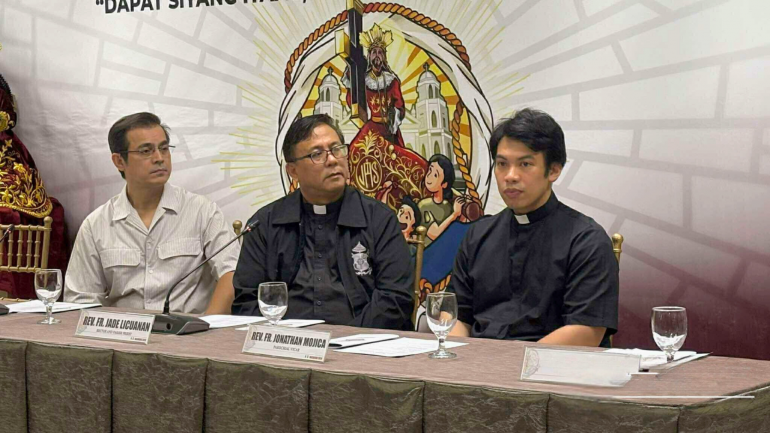
The theme of Traslacion 2026, “Dapat Siyang Itaas at Ako Nama’y Bumaba” (“He must increase, and I must decrease.”), draws from the words of St. John the Baptist and is meant to confront what church leaders describe as a growing tendency to idolize power, personalities, and self-interest.
Speaking during a press conference at the St. Benedict Building of the Minor Basilica and National Shrine of Jesus Nazareno on January 7, Rev. Fr. Ramon Jade Licuanan, rector and parish priest of the basilica, said the theme is especially relevant in a time when many individuals and institutions attempt to place themselves at the center, eclipsing God and the common good.
“John the Baptist prepared the way for Christ at a time when God was seen with obscurity,” Licuanan said. “People believed that if they saw God, they would die. Yet God chose to become like us. That choice was rooted in love, love that surpassed all human understanding.”
Fr. Licuanan said the humility embodied by John the Baptist is a necessary reminder today, particularly when “many would like to pretend to be God,” whether through power, influence, or public image.
“It’s important nowadays that we know God,” he said. “And like John the Baptist, this event will hopefully usher God into the hearts of the people.”
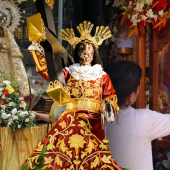
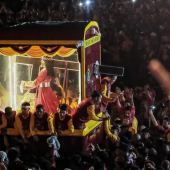
The Traslacion, held every January 9, draws millions of barefoot devotees who accompany the centuries-old image of the Black Nazarene through the streets of Manila. Since Quiapo Church was declared a national shrine, the feast of Jesus Nazareno has taken on a nationwide character, observed in churches and communities across the Philippines.
Fr. Licuanan noted that devotion to the Black Nazarene continues to grow, not only locally but internationally, with Filipino communities abroad forming their own groups of devotees.
Yet he emphasized that the Church’s hope goes beyond attendance numbers or the scale of the procession.
“For the longest time, our wish has been to connect faith with our being Filipinos,” he said. “Being a good Catholic should mean being a good Filipino. Our faith must be seen in our everyday life.”
Fr. Licuanan admitted that the depth of devotion he witnesses in Quiapo is difficult to measure or even put into words. What concerns him, however, is whether that devotion translates into social conscience beyond the church walls.
“I just hope that the depth and breadth of devotion will bore through the four walls of the church and be seen in the everyday life of Filipinos,” he said.
He posed a challenge that cuts to the heart of the celebration: “Can you imagine if millions of devotees of Jesus Nazareno begin to live with social conscience, social responsibility, and genuine care for others? The Philippines would be the best place anyone could ever wish for.”
As preparations for Traslacion 2026 continue, Manila officials have also assured the public of safety measures for the event. Mayor Isko Moreno expressed gratitude to national government agencies assisting in maintaining order and sanctity during the procession. He said assessments conducted by the city engineering division showed that the bridges along the Traslacion route are in fair condition.
For church leaders, however, the true measure of success will not be the smooth flow of crowds or the absence of accidents, but whether the nation’s most visible act of faith inspires humility, accountability, and love that endure long after the image has returned to Quiapo.
The feast is observed annually on the 9th of January. The image of Jesus Nazareno is transferred from the Recollect Church in Intramuros to its home in the basilica, popularly known as Quiapo Church.
Radio Veritas Asia (RVA), a media platform of the Catholic Church, aims to share Christ. RVA started in 1969 as a continental Catholic radio station to serve Asian countries in their respective local language, thus earning the tag “the Voice of Asian Christianity.” Responding to the emerging context, RVA embraced media platforms to connect with the global Asian audience via its 21 language websites and various social media platforms.
Latest News