



Major Philippine news organizations issued coordinated calls for accountability on December 9 as the country marked International Anti-Corruption Day, amplifying public concern over the ongoing social and economic damage caused by corruption, including recently raised allegations of large-scale irregularities in flood-control projects.
PTV (People's Television Network), GMA News, Manila Bulletin, ABS-CBN News, Inquirer.net, and Rappler released statements and content emphasizing that corruption is not a distant policy issue but a lived reality that shapes the safety, welfare, and dignity of communities. Their messages differed in tone but converged on a single point: accountability is long overdue.
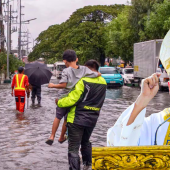
PTV urged the nation to “itakwil ang katiwalian” (Reject Corruption), warning that corruption has long blocked the country’s path to genuine development. Its imagery of storm-damaged coastal areas echoed public frustration over billions of pesos in flood-control projects that lawmakers and watchdogs say were marked by questionable approvals, bloated budgets, or poor implementation.
GMA News encouraged citizens to stay vigilant and demand transparency. The Manila Bulletin called for renewed public commitment to integrity and ethical governance. ABS-CBN News stressed the human cost, reminding the public that corruption drains not only funds but “mga buhay na sana’y nailigtas ng tamang serbisyo,” (lives that could have been saved with proper service), including reliable flood-mitigation systems.
Inquirer.net highlighted Pope Francis’ message that “corruption is ultimately paid for by the poor,” a statement resonant with communities who repeatedly ask why expensive flood-control structures have not prevented severe and recurring inundations.
Rappler, meanwhile, pointed to the role of investigative journalism in exposing wrongdoing. In its post, the organization asked: “When corruption wins, who loses? And what will you do?” It also promoted its Rappler+ briefing, Opening the Floodgates, where its journalists revisit the reporting that uncovered a major flood-control scandal and helped spark a nationwide push for accountability. Rappler’s emphasis underscored a key thread in this year’s media messaging, that truth-telling remains central to confronting entrenched corruption.
International Anti-Corruption Day, observed annually by the United Nations, seeks to highlight corruption’s corrosive impact on institutions and public trust. This year’s observance in the Philippines takes place amid heightened scrutiny of infrastructure spending, disaster-response programs, and procurement processes, issues deeply intertwined with the country’s vulnerability to climate emergencies.
The unified messaging from media organizations reflects a broader sentiment shared by civil society groups and ordinary citizens: corruption continues to be one of the country’s most painful obstacles to progress. When public resources meant for flood control, housing, health, or education are misused, the losses are visible in submerged villages, unsafe roads, broken systems, and opportunities that never reach the people they were meant to serve.
Across broadcast, print, and digital platforms, the theme was consistent: corruption is not simply theft from government coffers; it is theft from the lives and futures of millions of Filipinos. And on this International Anti-Corruption Day, the nation’s media amplified a collective demand: the cycle must end, and those responsible must be held to account.
Radio Veritas Asia (RVA), a media platform of the Catholic Church, aims to share Christ. RVA started in 1969 as a continental Catholic radio station to serve Asian countries in their respective local language, thus earning the tag “the Voice of Asian Christianity.” Responding to the emerging context, RVA embraced media platforms to connect with the global Asian audience via its 21 language websites and various social media platforms.
Latest News