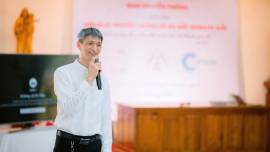
Fr. Paul Hoàng Mạnh Huy, head of the Communications Office of Phu Cuong Diocese in southern Vietnam and founder of the C-mate system, is helping Catholic priests, religious and laypeople understand and use artificial intelligence (AI) in pastoral ministry.
Artificial Intelligence (AI) is overwhelming us today! AI, as we all know, is about communication, information, data mining, and much more. It shapes the way we think and even determines our behavioural patterns.
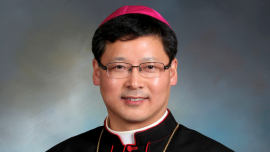
Archbishop Peter Chung Soon-taick of Seoul has called for greater attention to human dignity in an age of rapidly advancing artificial intelligence, warning against judging people solely by their abilities, productivity or efficiency.
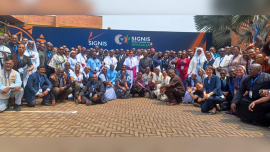
Pope Leo XIV has urged Catholic communicators to ensure that digital media remains at the service of humanity, calling for communication rooted in truth, human dignity, peace, and care for creation as the first SIGNIS World Congress to be held in Africa opened in Rwanda.
Cardinal Pablo Virgilio David, vice president of the Federation of Asian Bishops' Conferences (FABC), has called for greater transparency and ethical discernment over the proposed Pax Silica initiative, saying artificial intelligence must strengthen local capabilities while serving the common good.
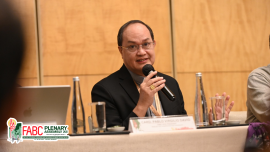
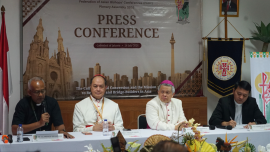
Artificial intelligence should be embraced as a tool for mission rather than feared as a threat, Cardinal Pablo Virgilio David, vice president of the Federation of Asian Bishops' Conferences (FABC), said at the closing press conference of the 12th FABC Plenary Assembly in Jakarta.
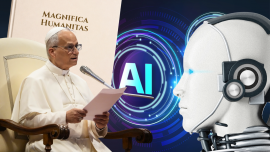
The clergy and the religious sisters of the Archdiocese of Lahore, eastern Pakistan, attended two separate study sessions focused on Pope Leo XIV’s Encyclical, Magnifica Humanitas on June 20, 2026.
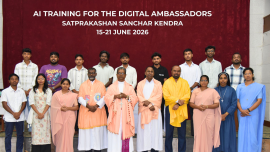
A week-long training program on the use of artificial intelligence (AI) tools for content creation is underway in Indore, Madhya Pradesh, bringing together young communicators from dioceses across central India.
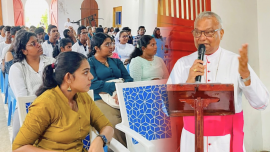
The Diocese of Galle in southern Sri Lanka organized a one-day workshop titled “Rediscovering Humanity in the Age of AI” on June 6, bringing together young people, clergy, and religious to reflect on the opportunities and challenges posed by artificial intelligence.
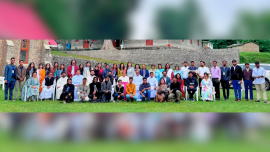
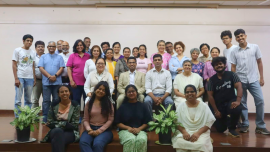
A five-day media training workshop on the theme “Digital Missionaries of Hope” brought together Catholic communicators, diocesan media personnel, and young people from across Pakistan at the Catholic Youth Center in Ayubia, northern Pakistan, from June 1 to 5.
In this spirit, Pope Leo cites a reflection attributed to Gandalf in J.R.R. Tolkien’s writings, which emphasizes faithfulness in one’s own time and responsibilities rather than control over broader forces: “It is not our part to master all the tides of the world, but to do what is in us for the succor of those years wherein we are set.”
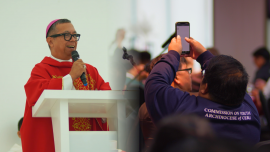
A Catholic bishop in the Philippines has warned that the increasing influence of artificial intelligence (AI) is contributing to a growing crisis of accompaniment, intimacy, and faith formation among young people, challenging the Church's mission of guiding the next generation.
The document calls for the need to “disarm technology,” freeing it from the control of Big Tech companies described as “more influential than governments.”
As the Catholic Church observed the 60th World Day of Social Communications on May 17, Leo XIV urged Catholics to ensure that technological progress and digital communication remain grounded in respect for human dignity and truth.
The Daughters of St. Paul organized a three-day workshop on artificial intelligence titled “Applied AI for Real Life: Tools, Skills & Safety” from May 8 to 10 at the Pauline Communication Centre in Mumbai, western India.
The Holy See has warned that renewed reliance on nuclear deterrence, the modernization of arsenals, and the growing integration of artificial intelligence (AI) into military systems are driving the world toward a more fragile and dangerous security environment.
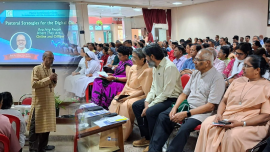
A seminar on “Using Artificial Intelligence in the Mission and Ministries of the Church” was held on March 14 at the Daughters of St. Paul Provincialate in Bandra, Mumbai, western India, bringing together around 200 religious and lay faithful interested in the role of digital technology in pastoral work.
The 30th FABC-OSC Bishops’ Meet concluded on Dec 12 at St. Francis University, Hong Kong, with a call for the Church in Asia to respond wisely and pastorally to the rapid rise of artificial intelligence.
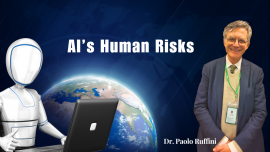
At the Bishops’ Meet 2025 currently underway in Hong Kong, Dr. Paolo Ruffini, Prefect of the Vatican Dicastery for Communication, delivered a deeply reflective and thought-provoking keynote address on the opportunities and challenges brought by artificial intelligence (AI).