Survey
RVA App Promo Image

Commentaries

  • Why Don’t You Speak?

    Leadership is never about speaking to dominate others; it is about speaking to serve them. A leader's voice should offer hope, especially to those who feel forgotten, marginalized, or powerless.
  • "Magnifica Humanitas" and the Cry of the Poor

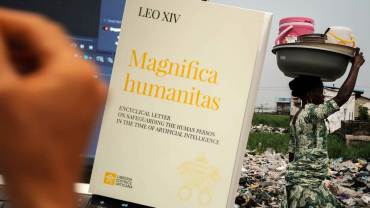
    With the publication of Magnifica Humanitas, Pope Leo XIV offers the Church a profound theological response to one of the defining challenges of the twenty-first century: the growing influence of artificial intelligence on human life. Much like Pope Leo XIII’s Rerum Novarum addressed the social consequences of the Industrial Revolution, Magnifica Humanitas confronts the moral and spiritual implications of the Digital Revolution. Its central concern is the human person and the Church’s responsibility to safeguard human dignity in an age increasingly governed by efficiency, numbers, data, and automation. The document presents a rich theological vision that integrates anthropology and ecclesiology. The sacred dignity of every human person is upheld; technological reductionism is critiqued. The encyclical presents a challenge and a roadmap for the Church in Asia, where technological progress meets deep poverty and social inequality.

  • There’s Something about Hospitals

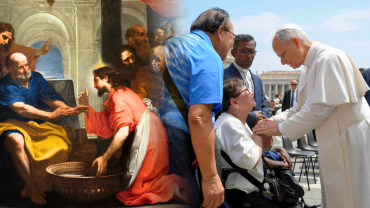
    There’s something about having to entrust your personal wellbeing into the hands of others, of feeling helpless when you have tubes stuck into your hands and wires attached to your chest. When you need the help of nurses to even go to the toilet.
  • Artificial Intelligence and the Human Question

    In this spirit, Pope Leo cites a reflection attributed to Gandalf in J.R.R. Tolkien’s writings, which emphasizes faithfulness in one’s own time and responsibilities rather than control over broader forces: “It is not our part to master all the tides of the world, but to do what is in us for the succor of those years wherein we are set.”
  • Communications must be Human

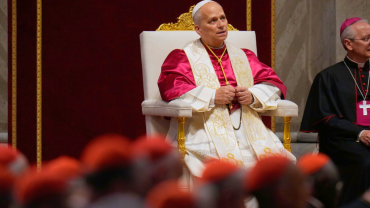
    Pope Leo makes it abundantly clear, "We need faces and voices to speak for people again. We need to cherish the gift of communication as the deepest truth of humanity, to which all technological innovation should also be oriented".
  • The Gift on Our Table

    In this spirit, Pope Leo XIV’s prayer intention for the month of May invites the whole Church and all people of goodwill to pray “for food for all.”
  • Scandal of Plenty

    The Pope’s prayer intention for May is simple: that everyone might have food and that food is not wasted. It sounds ordinary, almost too simple to notice. Yet it speaks into a world where something deeply disproportionate has become normal.
  • Repeal APFRA 1978!

    One of the key issues with APFRA lies in its language. Terms such as “inducement” and “allurement” are vague and open to interpretation. This lack of clarity can lead to inconsistent application.
  • Blessed Are the Peacemakers: FABC’s Prophetic Call

    In a world increasingly defined by war, division, and moral uncertainty, the Federation of Asian Bishops’ Conferences (FABC) has issued a timely and prophetic appeal for peace. Titled “Blessed Are the Peacemakers” (Mt 5:9), the pastoral statement is both a spiritual exhortation and a moral compass for a fractured global order.
  • Peace talks have failed. What then do we do?

    For many people around the world hoping and praying for successful peace talks between the United States and Iran, the announcement on April 12 that no agreement was reached after more than 20 hours of negotiations must have been severely disappointing.
  • You Can’t Be Pro-Life and Ignore War

    As Christians, we’re called to be defenders of life. We often hear the expression “from the womb to the tomb,” a powerful reminder that life is sacred from the moment of conception to its natural end.
  • Amid Missiles and Fear, the World Prays for Peace

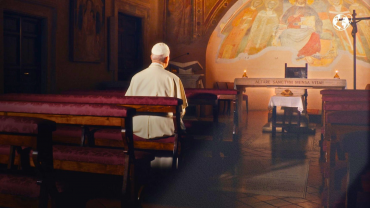
    Pope Leo XIV appealed to Catholics everywhere to unite spiritually for peace. “I ask all the faithful,” he said, “to pray the Lord’s Prayer and the Hail Mary for the peoples suffering from war, that hearts may be touched and that the path of dialogue and peace may prevail.”
  • Give Peace a CHANCE

    Pope Leo XIV has echoed this call. In a recent Angelus message, he said peace is not achieved through threats or weapons, but through “reasonable and responsible dialogue.”